MOV is common on iPhone, cameras and editing systems. The container is not inherently low quality or incompatible, but the codec inside may not be ideal for a Windows player, web upload or messaging service. MP4 H.264 with AAC audio remains the safest general delivery target; MP4 H.265 is useful when file size matters and the receiver supports HEVC.
Inspect the MOV before converting
Check resolution, frame rate, duration and audio. Phone footage may be variable-frame-rate, HDR or rotated through metadata. A camera MOV may contain high-bitrate intraframe video intended for editing. Converting either with an aggressive social preset can change color, motion or detail more than expected.
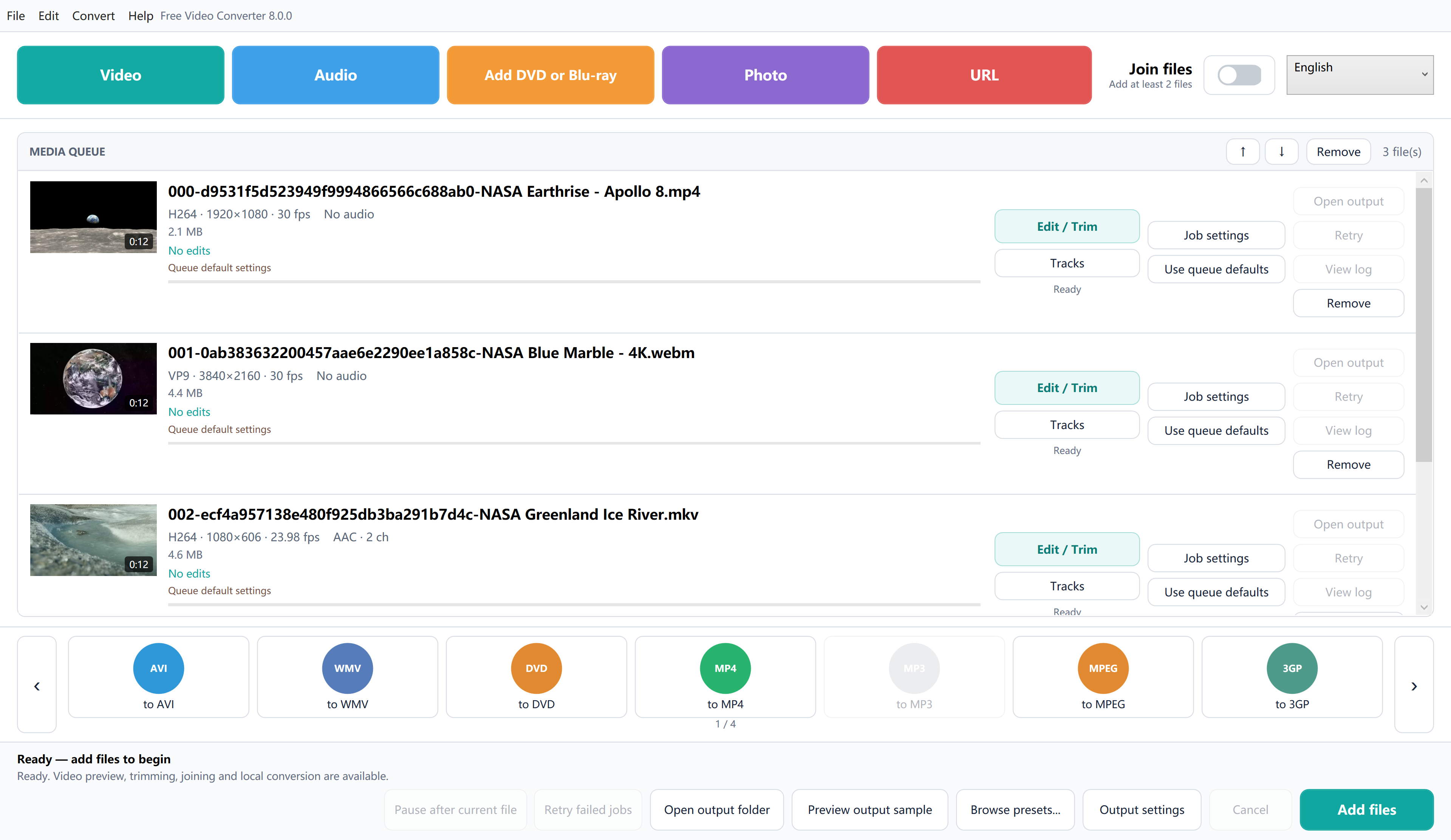
MOV to MP4 workflow
- Add one or more MOV files to the queue.
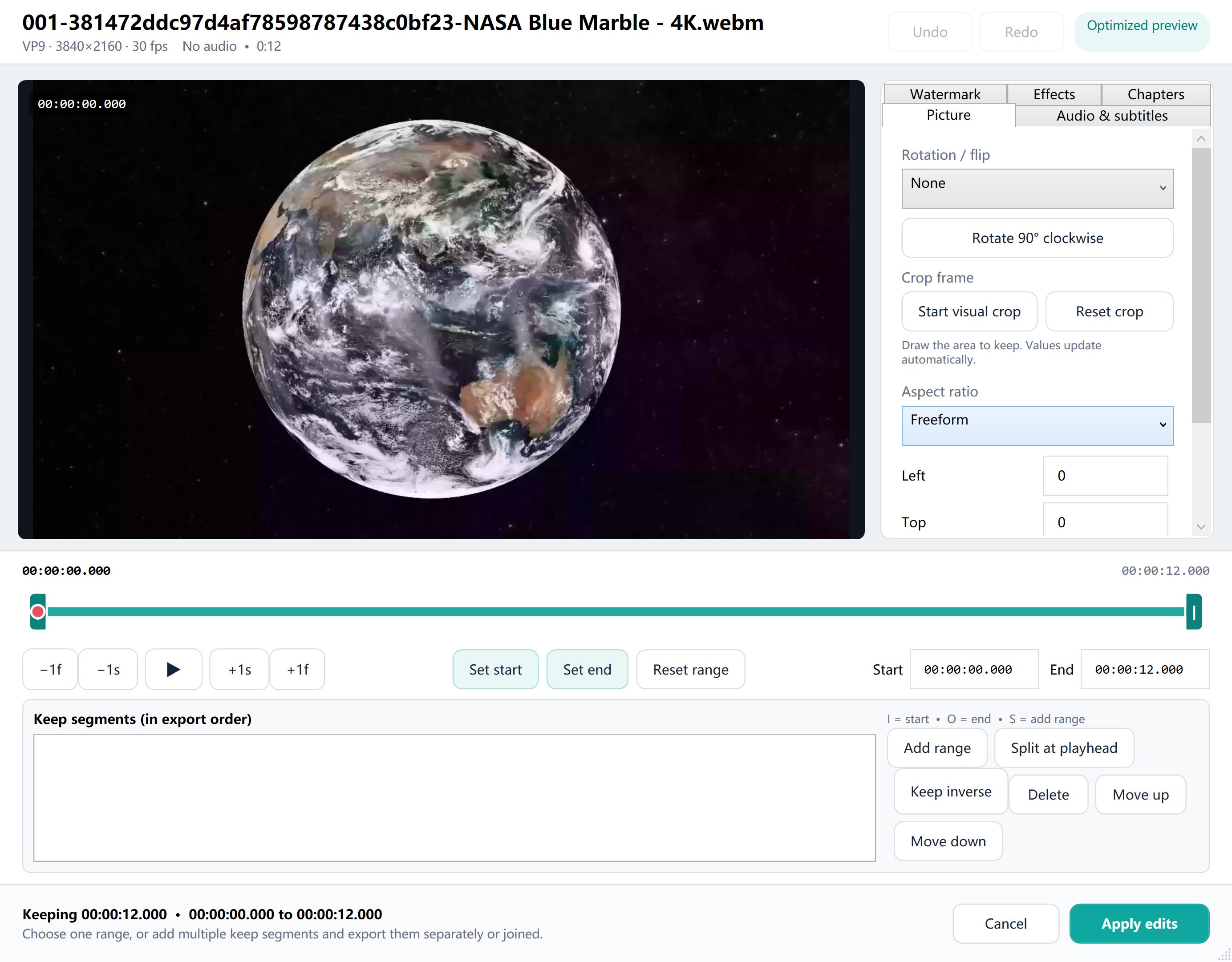
- Open Edit/Trim only when you need to remove footage, rotate pixels, crop or add subtitles.
- Choose MP4 H.264 and Same as source resolution/frame rate for the first compatibility test.
- Leave HDR handling on Automatic unless you have a defined HDR/SDR destination.
- Use constant quality for a visual master or target size for a strict upload limit.
- Convert to new file names and check color, orientation, synchronization and duration.
What about iPhone HDR video?
HDR video can look washed out when converted incorrectly or played in an SDR-only pipeline. Automatic mode preserves HDR for compatible 10-bit codecs and otherwise converts to SDR. That is a practical default, not a substitute for calibrated grading. Review skin tones, bright skies and dark areas on the destination display.
Why a MOV can appear sideways
Some devices store landscape pixels plus a rotation tag. A player honors the tag, while another ignores it. Preserve metadata when possible. If the destination still shows the wrong orientation, use the rotate control to transform the pixels rather than only changing metadata.
Batch-convert a folder safely
Choose queue defaults before adding a large set, then inspect exceptions such as a vertical phone clip, HDR recording or high-frame-rate camera file. Batch processing is most reliable when similar inputs share a preset and unusual files receive per-job settings. Use unique output names and keep the original folder read-only until verification is complete.
MOV to MP4 FAQ
Does changing MOV to MP4 always require re-encoding?
No. Compatible streams can sometimes be remuxed. Metadata, subtitle and codec constraints determine whether a lossless container change is possible.
Will the date and camera metadata remain?
Enable Preserve source metadata, then verify the exact tags needed by your workflow. Containers and devices do not support every metadata field equally.
Can I convert several iPhone videos at once?
Yes. Use the batch queue, but separate HDR, vertical and high-frame-rate exceptions if they need different treatment.
Try the workflow locally
Free Video Converter keeps local source files on your Windows PC and gives you explicit control over output names and settings.
Download Free Video Converter