MTS and M2TS files commonly come from AVCHD cameras, Blu-ray structures and long-form recording devices. They often contain H.264/AVC video, interlaced footage, AC-3 or PCM audio, camera timestamps and clips split at storage limits. Converting them to MP4 can make sharing easier, but camera footage deserves more care than a generic “MP4” preset.
Inspect before converting
- Confirm whether the footage is progressive or interlaced.
- Record the exact frame rate: 23.976, 25, 29.97, 50 and 59.94 are not interchangeable.
- Check audio codec, channel count and sample rate.
- Look for clips that are consecutive parts of one recording.
- Keep the complete camera folder when metadata or clip spanning matters.
Convert MTS/M2TS to MP4
- Copy the camera structure to reliable local storage and retain the original folder.
- Add the intended clips in recording order.
- Choose MP4 H.264 with same-as-source resolution and frame rate for broad delivery.
- If the source is interlaced and the destination expects progressive video, select a deliberate deinterlacing workflow and inspect motion.
- Choose AAC audio for ordinary delivery, preserving channel layout where the destination supports it.
- For split recordings, join only clips that belong together and verify the seam.
- Write to a new folder and run a full decode plus duration/audio checks.
Interlaced video and frame rate
Interlaced camera video can show comb-like edges during motion on progressive displays. A correct deinterlacer uses field order and timing; a simple resize does not solve it. If 50i or 59.94i material is converted to 25p or 29.97p, motion may become less fluid. If converted to 50p or 59.94p, output is larger and requires more processing. Test motion, pans and thin diagonal lines before committing an archive.
Joining camera clips safely
Many cameras split long recordings into several MTS files. Sorting only by filename can be wrong after copies or renamed folders. Use recording order and duration metadata, then confirm there is no missing or duplicated audio at each seam. Lossless joining is appropriate only when stream parameters and timestamps are compatible; otherwise normalized encoding is safer.
Delivery copy versus archive
An MP4 is convenient, but it should not automatically replace the original camera structure. The original may preserve metadata, playlist relationships or audio information not carried into the delivery copy. Keep the original until the project is complete and backed up. Use H.264 MP4 for sharing; choose an editing or archival format according to the downstream application's published requirements.
Dates, orientation and camera metadata
File-system creation time is not a reliable substitute for recording metadata after footage has been copied, downloaded or restored. Keep the original camera folders and document the intended clip order before changing names. Check whether orientation, timecode, location or camera-specific information is needed downstream; a delivery MP4 may not carry every private metadata field from the AVCHD structure. If an editor relies on reel names or timecode, run a small ingest test before converting the full card. For family or legal records, keep both the untouched source and a separate manifest of hashes.
MTS/M2TS FAQ
Are MTS and M2TS the same?
They are closely related MPEG-2 transport-stream file forms used in AVCHD/Blu-ray workflows, but context and associated folder metadata can differ.
Why does converted motion look jagged?
The source may be interlaced or have the wrong field-order/deinterlacing choice.
Can I combine every clip from the camera?
Only combine clips that belong to the intended recording and have compatible timing/stream properties.
Try the workflow locally
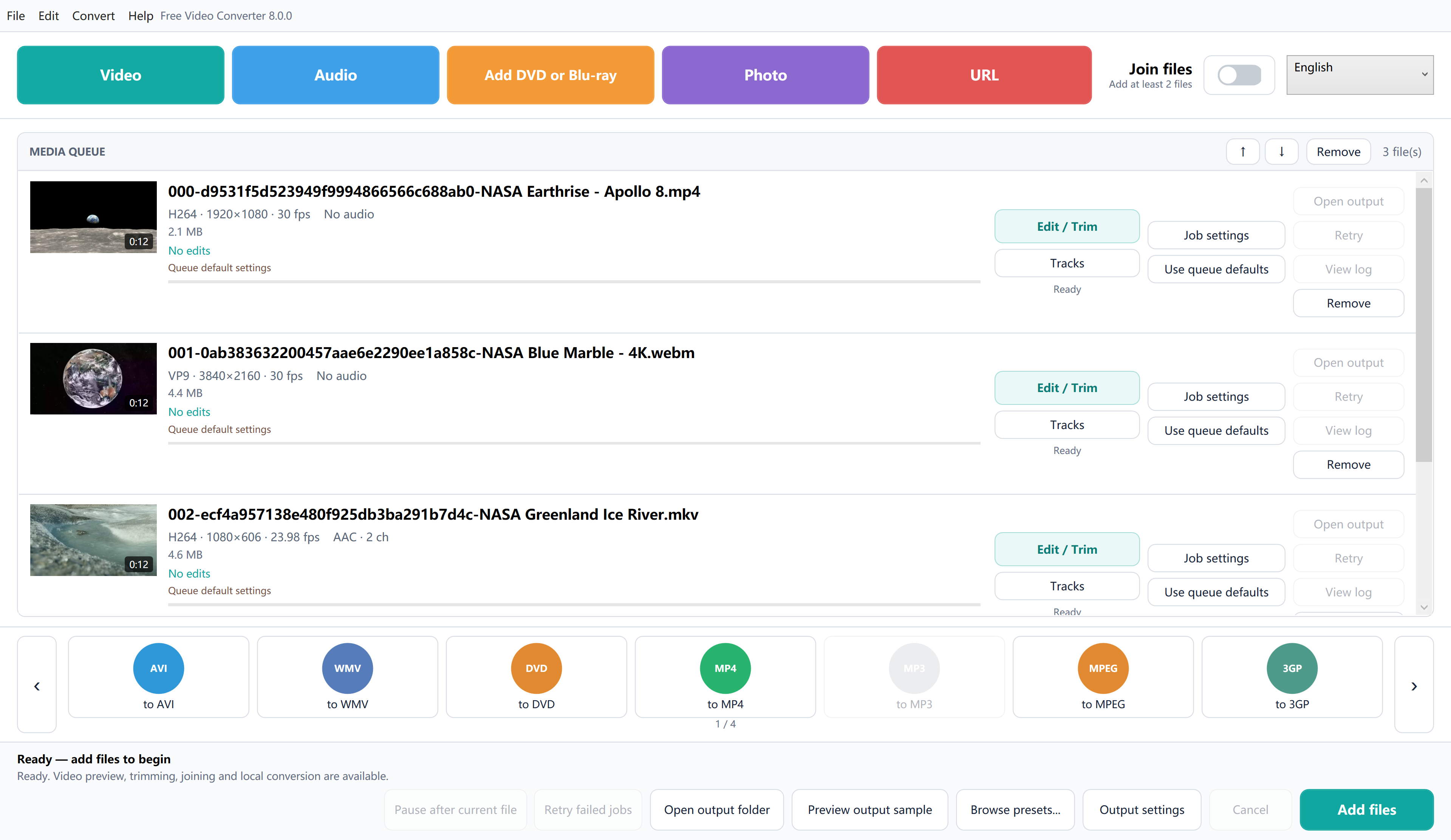
Free Video Converter keeps local source files on your Windows PC and gives you explicit control over output names and settings.
Download Free Video Converter