Windows error 0xc00d36c4 commonly appears when a player cannot handle a file's container or codec, when optional media components are absent, or when the file is incomplete or damaged. The safest response is to identify which of those conditions applies—not to download an anonymous “mega codec pack.”
1. Separate container, codec and damage
The extension (.mp4, .mkv, .mov or .webm) identifies a container. Inside it may be H.264, HEVC, AV1, VP9 or another video stream plus one or more audio streams. Microsoft's Media Player codec page lists codecs included with Windows and optional extensions. If a second trusted player also stops at the same position, or a media probe reports truncated data, suspect file damage rather than only a missing decoder.
2. Check Windows media components
- Install pending Windows updates and restart.
- For HEVC, VP9 or AV1, check the corresponding Microsoft Store extension documented by Microsoft.
- On Windows 10/11 N editions, install the official Media Feature Pack.
- Avoid random codec bundles that replace system filters or install unrelated software.
- Test a known-good H.264/AAC MP4. If that also fails, troubleshoot the player/system before converting the problem file.
3. Create a compatible copy
- Add a copy of the problem video to Free Video Converter.
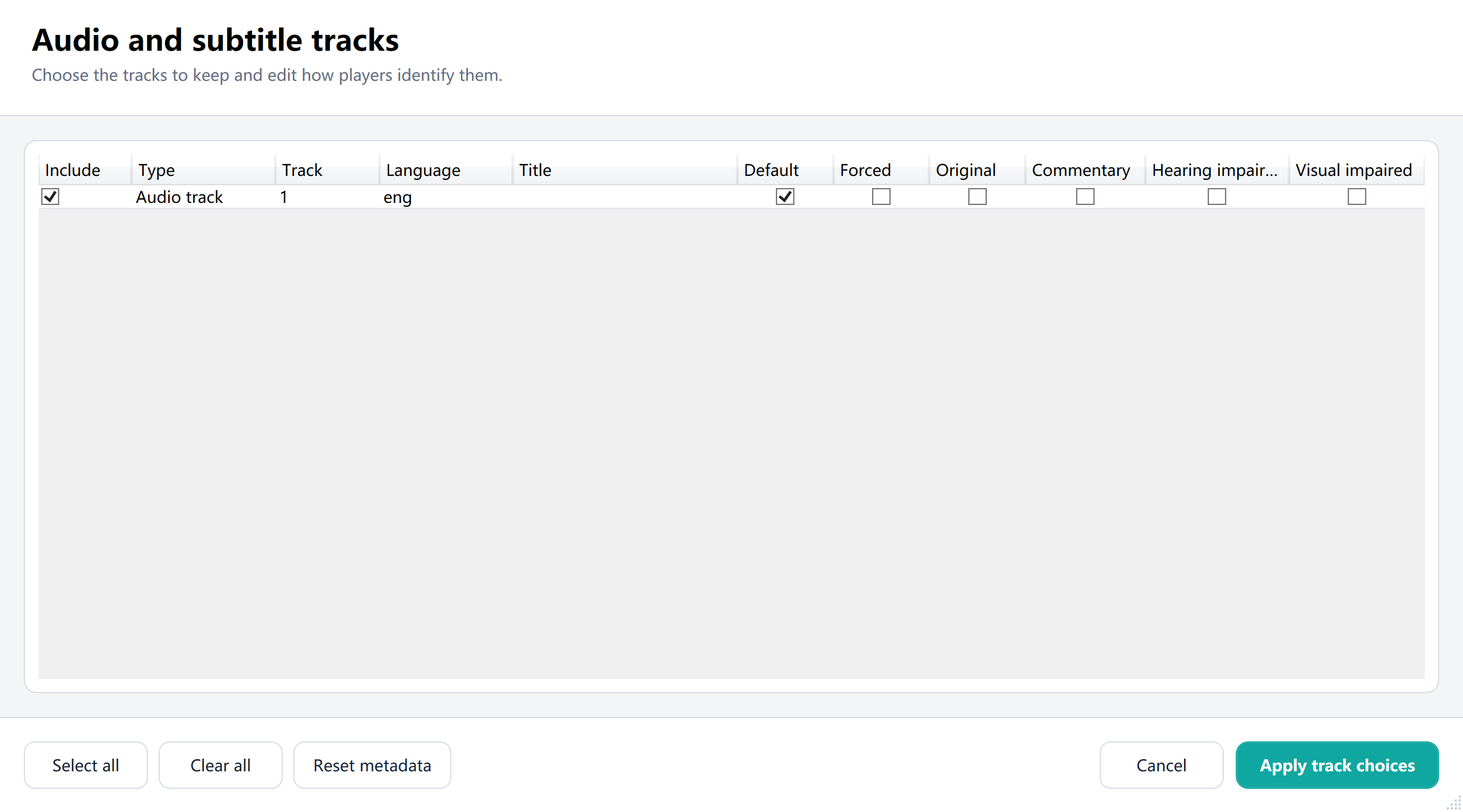
- Confirm whether the app can read duration and stream information.
- Select MP4 H.264 with AAC audio for a conservative Windows playback target.
- Keep source resolution/frame rate unless a device limit requires a change.
- Choose a new output name and start conversion.
- Decode and play the whole output. If conversion stops at a repeatable position, preserve the logs and investigate source corruption.
What the result tells you
| Observation | Likely interpretation | Next step |
|---|---|---|
| H.264 copy plays | Original codec/container was unsupported by that player | Keep original as archive; use copy for delivery |
| Conversion cannot read metadata | Unsupported structure, encrypted content or severe damage | Recopy source; inspect origin and rights |
| Conversion fails at same timestamp | Damaged/truncated packet or decode error | Preserve logs; try recovery from original media |
| Video plays but no sound | Audio codec/track issue | Select intended track and encode AAC |
Security and privacy
A codec error is not a reason to disable Microsoft Defender, run an unknown executable as administrator or upload private media to an unfamiliar site. Keep local files local when confidentiality matters. Free Video Converter processes local media on the PC and does not require an account, but all media parsers should still be treated as security-sensitive: keep Windows and the application current.
0xc00d36c4 FAQ
Does changing the extension fix the error?
No. Renaming does not rebuild the container or change the codec.
Should I install every codec pack I find?
No. Prefer Microsoft's documented extensions or a controlled conversion to a known destination.
Can conversion repair a truncated file?
Sometimes it can recover decodable portions, but it cannot recreate missing bytes. Preserve the original and verify any recovered output carefully.
Try the workflow locally
Free Video Converter keeps local source files on your Windows PC and gives you explicit control over output names and settings.
Download Free Video Converter